
Published 2026 timescales vary, with some estimates putting a standard sized home at around 6 to 12 months and a larger or bespoke house at 12 to 18 months or more. Other estimates put the construction itself at approximately 6 to 9 months. The 6 to 9-month estimate assumes no hold ups from planning decisions and material or labour shortages. Design and planning come before the build starts.
When you plan a major project, you want a straight answer on the schedule. These figures are published estimates and never promises. The actual time it takes will depend on your design, ground conditions, site access and the finish you choose. Every house is different, and building a completely new property is a complex process.
How do builders quote for a new house?
Builders price from drawings and a specification, not from a cost per square metre. Architectural drawings show the physical dimensions and layout of the new house. A specification is a detailed document listing exactly what materials to use, down to the type of bricks and the type of insulation. A schedule of works is the running order of the job, showing which trade arrives when.
Per square metre figures are only a way to set an early budget. Published figures differ widely because some cover a basic shell and others a finished room. You cannot use them to tie a builder to a fixed price. You must present a detailed specification to get an accurate quote for the cost to build a house.
Make sure you understand what is normally outside a basic build quote. Kitchens and bathrooms, flooring and decoration are usually priced separately. Professional fees, planning fees, building control fees, party wall costs and Value Added Tax are also excluded from the main construction price. Labour is always a large share of any job, and London and the South East cost more than other areas.
Accepting an estimate as if it were a fixed quote is a common mistake. A quote is fixed and an estimate is not. Under the Consumer Rights Act 2015, building work must be done with reasonable care and skill, for a reasonable price and within a reasonable time where none was agreed. You also have a 14-day cooling-off period for contracts agreed at home, by phone or online.
How long do design and planning take?
Designing a house and getting the permissions sorted can take months, as the table below shows. A published government guide states a local planning authority usually has up to eight weeks to decide minor applications and up to thirteen weeks for major development such as large housing sites. One house is most likely handled as minor, but you must ask your council to confirm.
Planning permission and building regulations are two separate systems and many projects need one, both or neither. Many extensions and loft conversions on houses fall under permitted development, within set limits on size, height and position. Flats and maisonettes do not have these rights, and conservation areas, listed buildings and properties with planning conditions are more restricted. Larger single-storey rear extensions can go through prior approval.
A new house is a different kind of project from an extension or loft conversion, so ask your council which planning route applies to yours. A lawful development certificate gives written proof that a project is permitted development.
Once planning permission is granted, development must generally be started within three years in England, or five years in Wales. If work has not started by then, the applicant will probably need to reapply. Understanding exactly how long planning permission takes helps you avoid booking builders too early.
What does building control involve and when?
Building regulations approval is needed for extensions, loft conversions and most structural and services work, and your building control body will confirm what applies to your house. You can choose council building control or a private registered building control approver.
A full plans application is often used for larger schemes and complex work. It is checked before work starts, and plans should be submitted well in advance of when work is to start on site. The approval notice is valid for three years from deposit, and the authority may declare it of no effect if work has not started. Without approval you will not have the compliance certificates needed to sell your home.
Being told building regulations are not needed is a warning sign of a cowboy builder. Councils can now take enforcement action for up to ten years if work does not comply. Inspections happen regularly as the work progresses. A typical order covers foundations, the main structure, making the building weathertight, first fix, second fix and snagging.
Under the CDM Regulations 2015 a domestic client's health and safety duties normally pass to the builder. If you are knocking down an existing property, remember that houses built or refurbished before 2000 may contain asbestos. This must be dealt with by competent people. Never attempt to remove asbestos yourself. Have a qualified professional check.
The stages of building a house and typical timescales
The table below shows typical timescales for the different stages of building a house.
|
Stage |
Typical time |
|---|---|
|
Planning and design |
Few weeks to 3 to 6 months |
|
Groundworks |
Several weeks to 2 months |
|
Construction and inspections |
6 to 12 months |
|
Final touches |
Several weeks to 2 months |
These figures are typical published timescales for 2026, and real timescales will differ. Estimates vary. Some 2026 estimates put the build at approximately 6 to 9 months, and state the main structure of a brick built home can take 6 months while a timber framed house may take only a matter of weeks. These figures assume no hold ups from planning decisions and material or labour shortages.
How long do groundworks take?
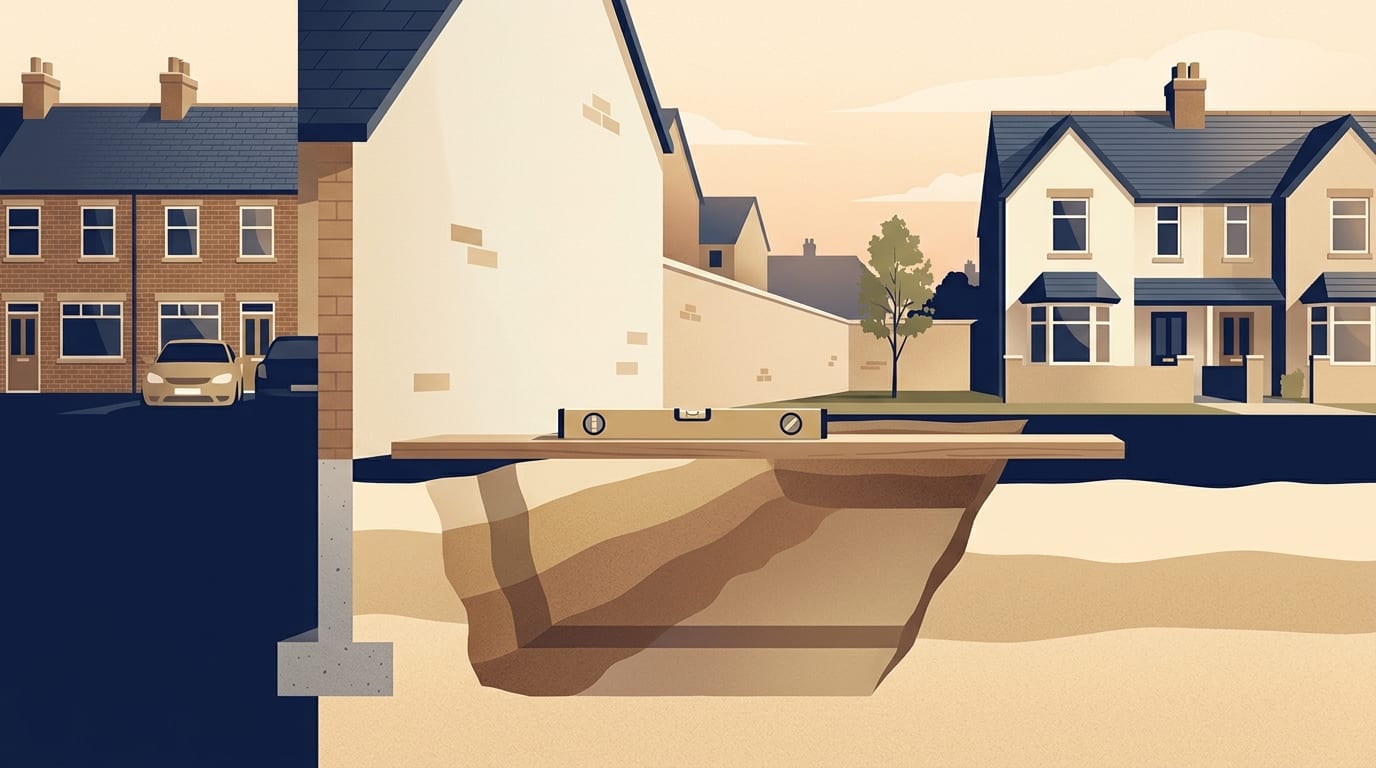
Groundworks come before the main construction, and the table above puts them at several weeks to 2 months. Poor weather can hold groundworks up.
Before digging starts, you will need a structural engineer's calculations. Foundations are the first stage building control inspects as the work progresses. Leave all structural decisions to the engineer and your builder.
If you are building on or near a shared boundary, the Party Wall etc. Act 1996 may apply in England and Wales, so check before work begins. Scotland and Northern Ireland have their own systems, so readers there should check locally.
How long does the main construction take?
The main construction is usually run by a general builder or main contractor. They manage the site, order the materials and bring in specialist subcontractors for specific tasks like bricklaying, roofing and plastering. The first major goal is making the building weathertight. This means the external walls are up, the roof is covered, and the windows and doors are fitted so the rain cannot get in.
Once the house is weathertight, the first fix begins. First fix covers the plumbing pipes and electrical cables that are installed before the plastering hides them inside the walls, and it is done by qualified tradespeople.
After the plasterers have finished and the walls are dry, the second fix starts. Second fix means connecting the sinks, fitting the light switches and sockets, hanging the internal doors and fixing the skirting boards. This turns a bare shell into a functioning house.
The final stage is snagging. Snagging means checking the finished property for minor faults, such as scratched paint, missing sealant or sticking doors. You should walk around the site with the builder, make a list of these faults, and ensure they are fixed before you make the final payment on completion.
How much does the build method change the time?
The materials you choose for the main structure can change the schedule. A traditional brick built home will take longer to build than a modular or timber framed house. Weather can also hold up a build.
Some 2026 estimates state the main structure of a brick built home can take 6 months. In contrast, a timber framed house may take only a matter of weeks for the main structure to be erected.
A shorter time for the main structure does not mean the whole project finishes sooner, as the other stages in the table above still apply. Ask your builder for a written programme for the method you choose.
What causes a house build to overrun?
House builds rarely run perfectly to the original schedule. Delays can happen, and understanding the common causes helps you plan a realistic timeline.
- Planning decisions taking longer than the local council expects.
- Material and labour shortages.
- Poor weather conditions stopping groundworks or roofing.
- Changes of design made by the homeowner during the build.
- Building one's own project without professional site management.
Changes of design made during the build are called variations. Variations are changes to the materials or layout made after the price is agreed. They can cost extra time and money. Changing the design mid-build without agreeing the cost in writing first is a common mistake that leads to budget blowouts.
Your quote may also include provisional sums. Provisional sums are allowances for things that cannot be priced accurately yet, such as groundworks where the exact soil condition is unknown. If the work takes longer than the provisional sum allows, the schedule and the final bill will increase.
To protect yourself against delays, always allow a contingency. A contingency is a reserve fund of money and extra time set aside specifically for unexpected problems.
How to manage the schedule and avoid scams
Good communication keeps a project on track. You need to know exactly what the builder plans to do and when. Before you sign a contract, you should ask the builder specific questions about how they manage their time.
- Can you provide a written schedule of works with stage dates?
- Will you agree to stage payments tied to physical progress on site?
- How do you calculate the cost of variations if the design changes?
- Who manages the subcontractors and ensures they turn up on time?
- What happens to the timeline if bad weather delays the start?
Never pay large cash deposits upfront. Cash deals offered without paperwork are a common scam that leaves you with no proof of contract. Stage payments are the safest approach. This means paying in chunks as the work reaches agreed milestones, rather than handing over huge sums before the work is done. Paying the final instalment before snagging and certificates are done leaves you with no leverage.
Choosing a builder on price alone is a common mistake. Cowboy builders take on more jobs than they can staff, which can drag a job out. Always get three written quotes against the exact same drawings, visit their finished jobs, and ask for proof of insurance. You should also tell your home insurer about the building work.
Look for builders registered with official schemes. The Federation of Master Builders vets and independently inspects members. TrustMark is the government-endorsed quality scheme. Gas work needs a Gas Safe registered engineer and electrical work needs a registered electrician. Always confirm membership on the scheme's own register and treat it as a good sign, not a guarantee. If you have a dispute, Citizens Advice is the signpost for help. Section 75 protection applies to credit card payments.
Common questions
How long does a new build take?
Published 2026 estimates put a standard sized home at around 6 to 12 months and larger or bespoke projects at 12 to 18 months or more. These figures only cover the time on site and do not include the months spent getting drawings and planning permission.
How long does a self-build take?
The published timescales above do not give separate figures for a self-build. Design and planning come before the build, and managing the site yourself is one possible cause of overruns, so allow for a contingency.
How long to build a house UK?
Some estimates put the construction phase at approximately 6 to 9 months. A brick built structure takes longer than a timber framed house, which can have its main structure erected in a matter of weeks. The final timeline always depends on the weather, material availability and the complexity of the design.
What is the difference between a quote and an estimate?
A quote is a fixed price for the work detailed in the specification. An estimate is not fixed, so the final cost can change. Ask for a quote before you commit to knocking down and rebuilding a house.
What to do next
Getting a house built on time requires careful preparation before the builders arrive. Follow these steps to keep the project on track.
- Finalise your drawings and specification so every builder prices the exact same job.
- Ask your council which planning route applies and wait for its written decision before starting work.
- Ask building control which application route suits your project, such as full plans.
- Get three written quotes and reject any estimates or cash deals without paperwork.
- Check the builder's credentials on the official TrustMark or Federation of Master Builders registers.
- Sign a written contract that includes a clear timeline, a contingency fund and stage payments tied to progress.
When you have your drawings and permissions ready, you can find a builder near you to start pricing the work.
Find a top rated builder near you
3,554 builders across the UK, each ranked on their Google rating and the number of reviews behind it. Start with your county: